
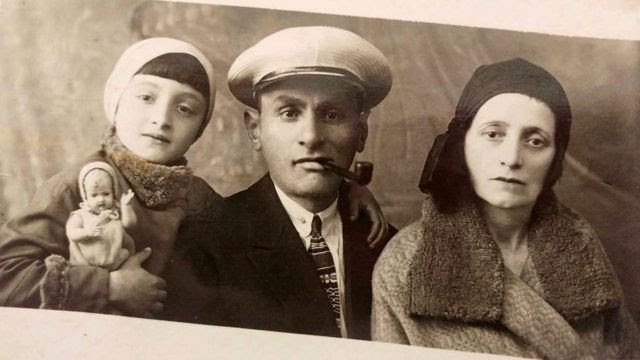
Ada, Rose, Aleksandr Lev, who died in the Kherson ghetto
The city of Kherson, the only regional (oblast) center of Ukraine that was occupied by the Russian troops during the current large scale war, appeared to be a real spotlight in November 2022. On November 11, the Armed Forces of Ukraine liberated Kherson. Since the very beginning of the war, People Who Care Foundation has been closely supporting the refugees of Kherson and its region (oblast), especially when active hostilities took place there.
It should be particularly noted that Kherson is not just a city of our neighbouring oblast. It was in Kherson that PWC President Igor Levenshtein’s great-grandfather, grandfather, and father were born.
Kherson was founded as a fortress, shipyard, and town by the order of the Russian Empress Catherine the Great in 1778. The town was located within the Pale of Settlement – a special area (territory/zone) allotted to the settlements of the Russian Empire Jewish population by Catherine the Great. Kherson became an important center of the Jewish life in the South of the empire.
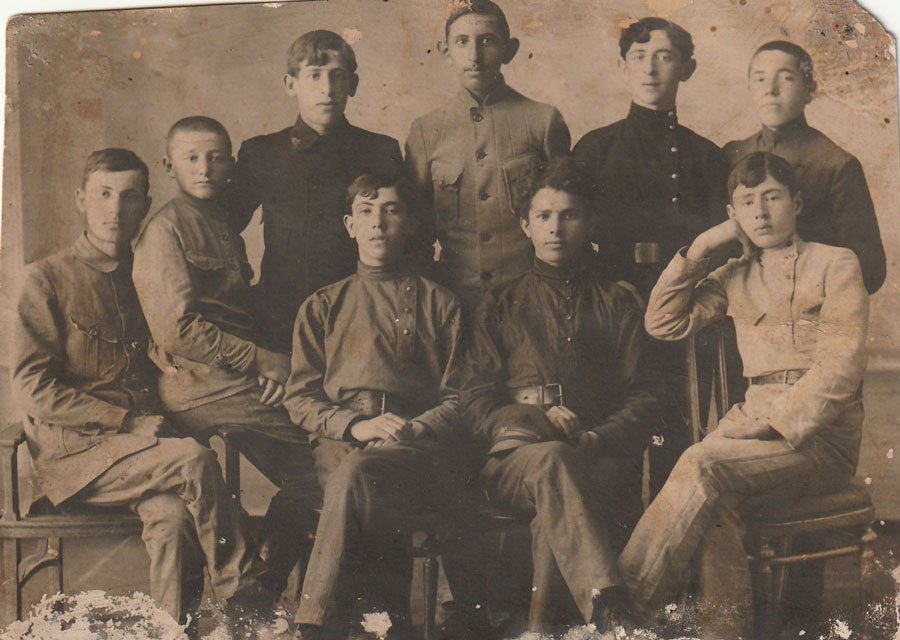
At the beginning of the XX century, the Jewish population of Kherson numbered more than 30%. There were 4 synagogues and 14 Jewish educational institutions (schools and colleges) in the town, and the Jewish vocational school being among them, where Igor Levenshtein’s grandfather Faivel Levenshtein studied (Photo above: The graduates of the Kherson Jewish vocational school. Third on the left – Feivel Levenshtein. 1916.)
During the years of Soviet power, the life of the Jewish community began to collapse. On the eve of World War II the Jewish population of the city numbered only 17% of the total population. Yet it was Holocaust that hit a terrible blow to the Jewish people.
In August 1941, the Germans entered Kherson. The Nazi troops were instructed: to eliminate the entire Jewish population. But first the Jews were supposed to be found or defined, among the others. Therefore, one of the first orders of the new government in Kherson read: all Jewish people must come to get registered. Failure to follow orders resulted in the death penalty. All the Jews of the city were gathered in one compact place that covered the territory of four streets fenced with barbed wire. The entire non-Jewish population was evicted from that place, only the Jews were left. The Jews from other streets of Kherson were settled in the houses that were liberated. The Nazi authorities promised that they would be moved to Palestine in an organized manner.
People were promised that they would be able to live in peace and order in the ghetto. But the conditions were inhuman: dozens of them were settled in cramped rooms, with the lack of oxygen and water in hot weather.
In the middle of September, the Jews of Kherson were shot dead into an anti-tank ditch on the outskirts of the city. The execution lasted for two days.
After the exhumation, the remains of more than 10,000 people were found at that place. Today nothing reminds about the tragic fact that there was once a ghetto in Kherson. Nothing at all. Neither memorable symbol, nor collective memory signs of this place.
Prior to the Russian invasion in 2022, approximately 8,000 Jewish people lived in the Kherson oblast (persons eligible for repatriation to Israel under the Israel Law on Return). At present, this figure has changed dramatically because many Jews did not survive the hostilities and occupation, and many fled and are fleeing this very dangerous region. Among those Jewish people who left Kherson are our olim whom we helped thanks to your generosity. We hope to further support and help them.
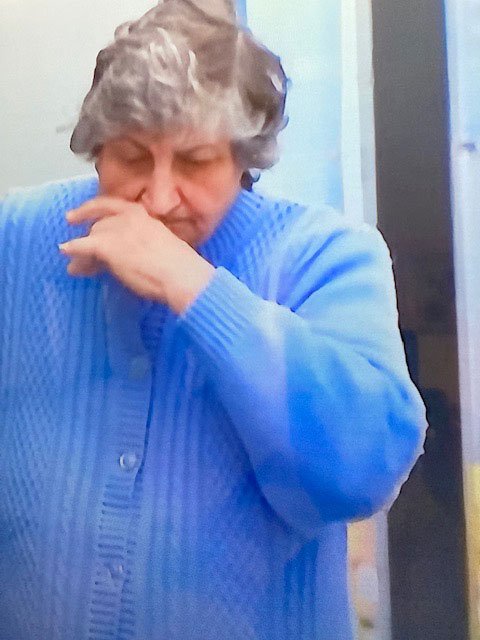
Isabella Goldberg, who lost all documents during
the shelling.